Distributed teams
One place to talk, with the work already in it.
For organizations whose people work across locations, time zones and shifts — where context is lost between the message, the task and the person.
The problem today
Distributed teams
- 01A question about a task is asked in chat; the answer lives in the task tool.
- 02Night shifts and remote members see a different picture than the office.
- 03Onboarding a remote hire means five accounts and a welcome someone has to remember.
- 04Who is actually present, and when, is not the same as who is online.
The connected workflow
One place to talk, with the work already in it.
- 01
Hire accepted
Role, projects and rooms granted with the hire.
- 02
Welcome sent
By itself, in sequence, with their name.
- 03
Task mentioned
The task appears in the thread with its state.
- 04
State changes
The room hears about it from the system.
- 05
Presence known
Attendance and portal access per group and time window.
Key features
Operations
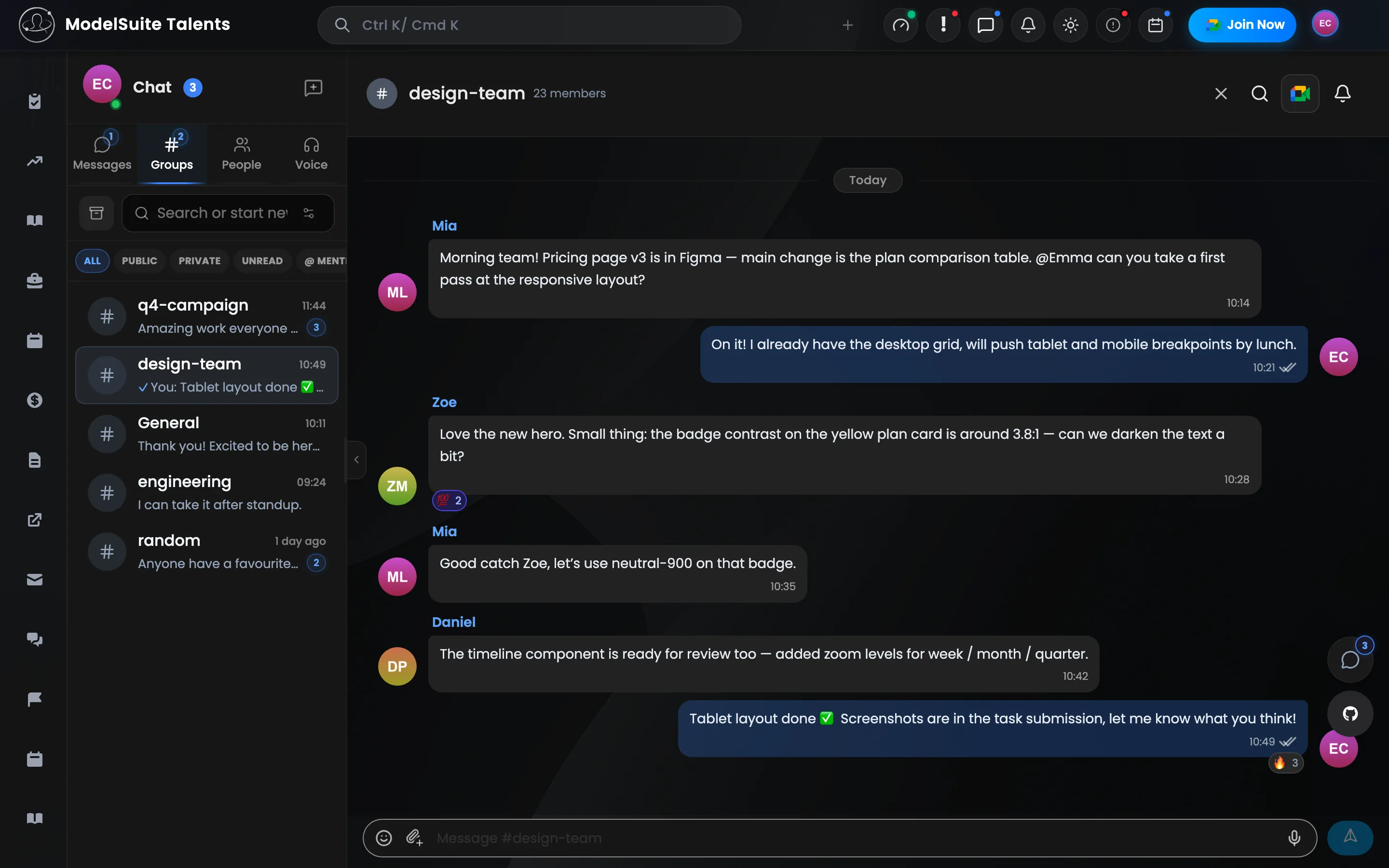
Messenger
Communication connected to the work.
Explore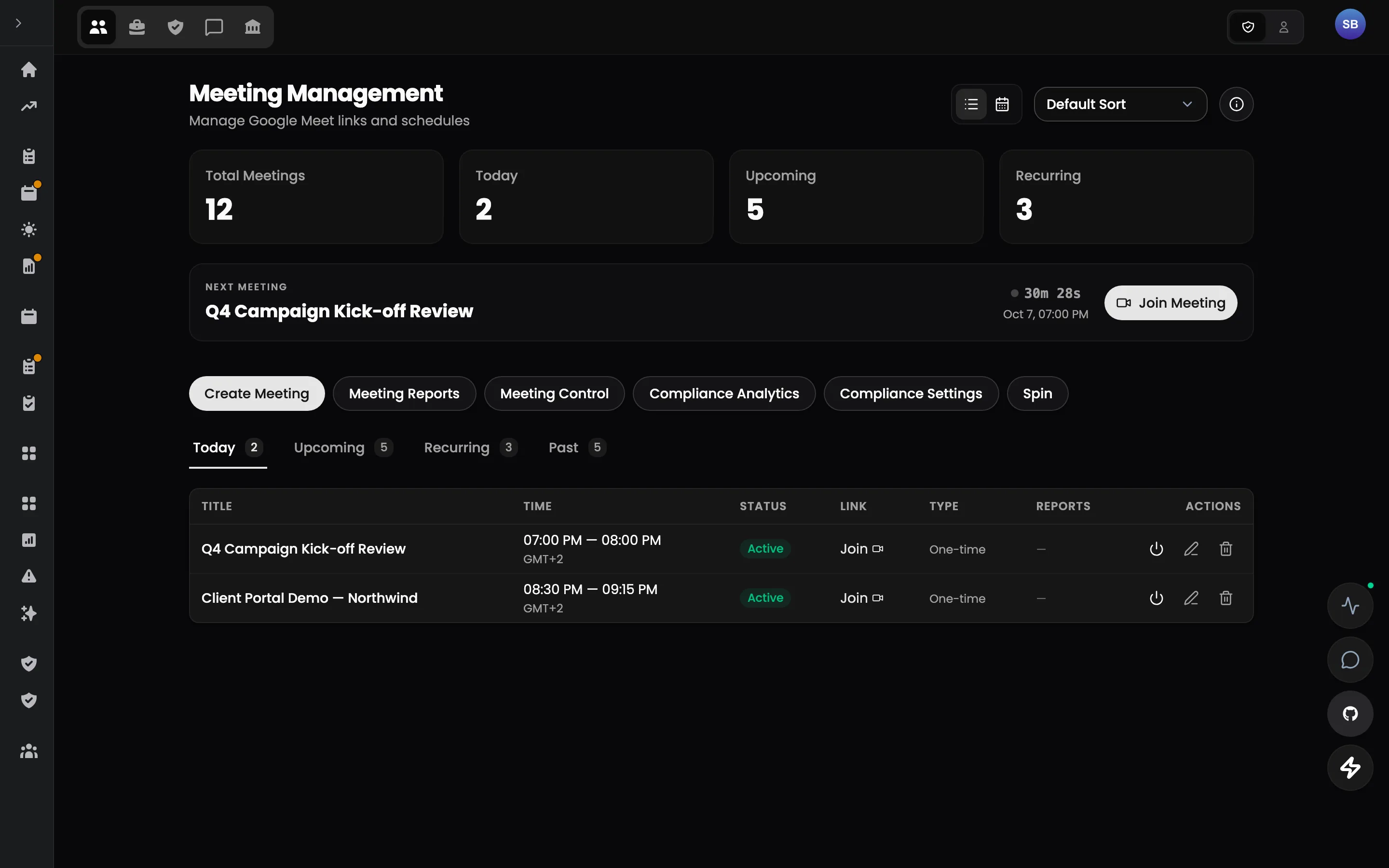
Operations
Meetings
Meetings with attendance, summaries and consequences.
Explore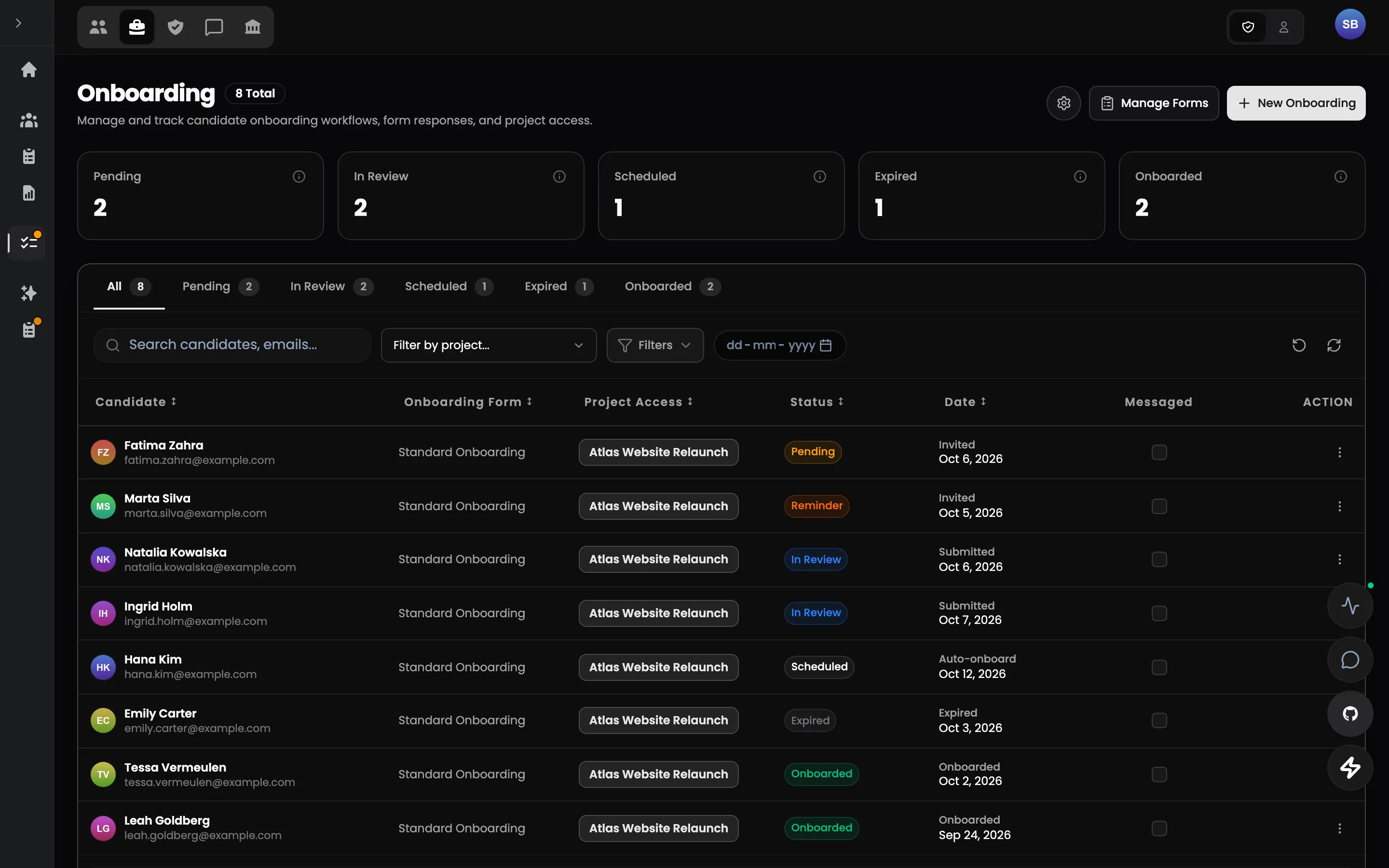
People
Onboarding
Don't stop at accepted. Follow them until day one.
Explore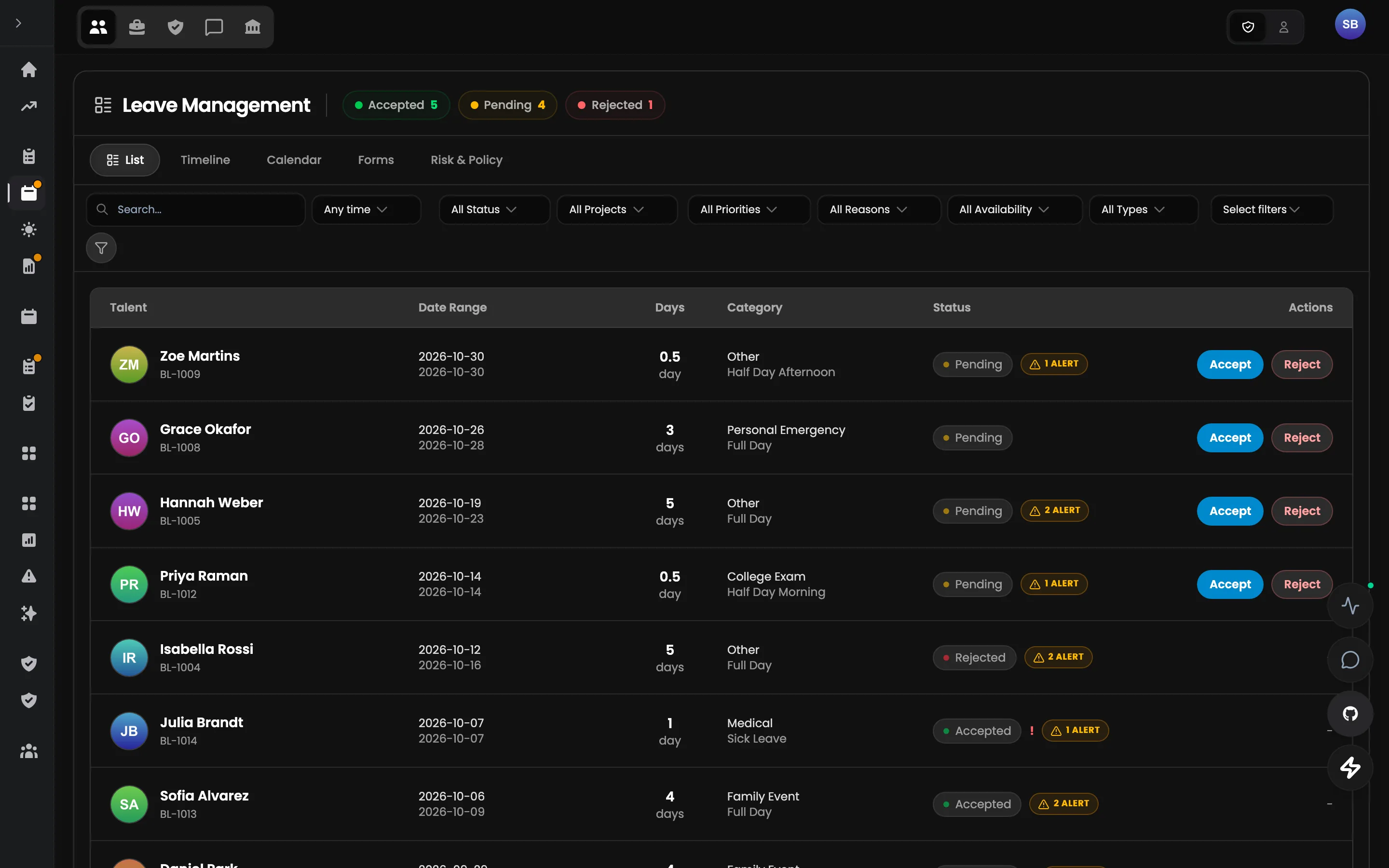
People
Time off & attendance
Leave that changes capacity — automatically.
Explore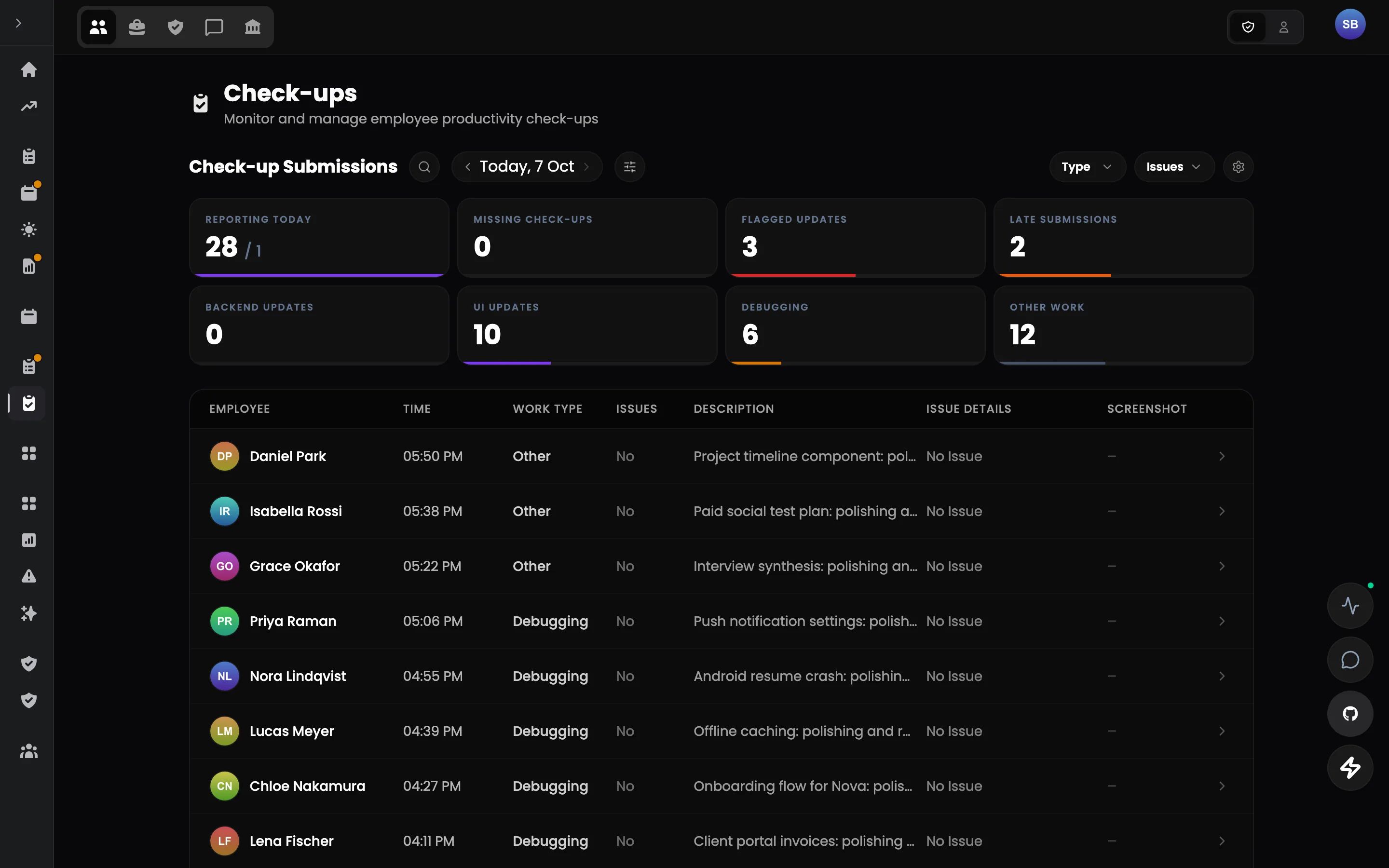
Work
Daily check-ups
Morning intent. Evening proof.
Explore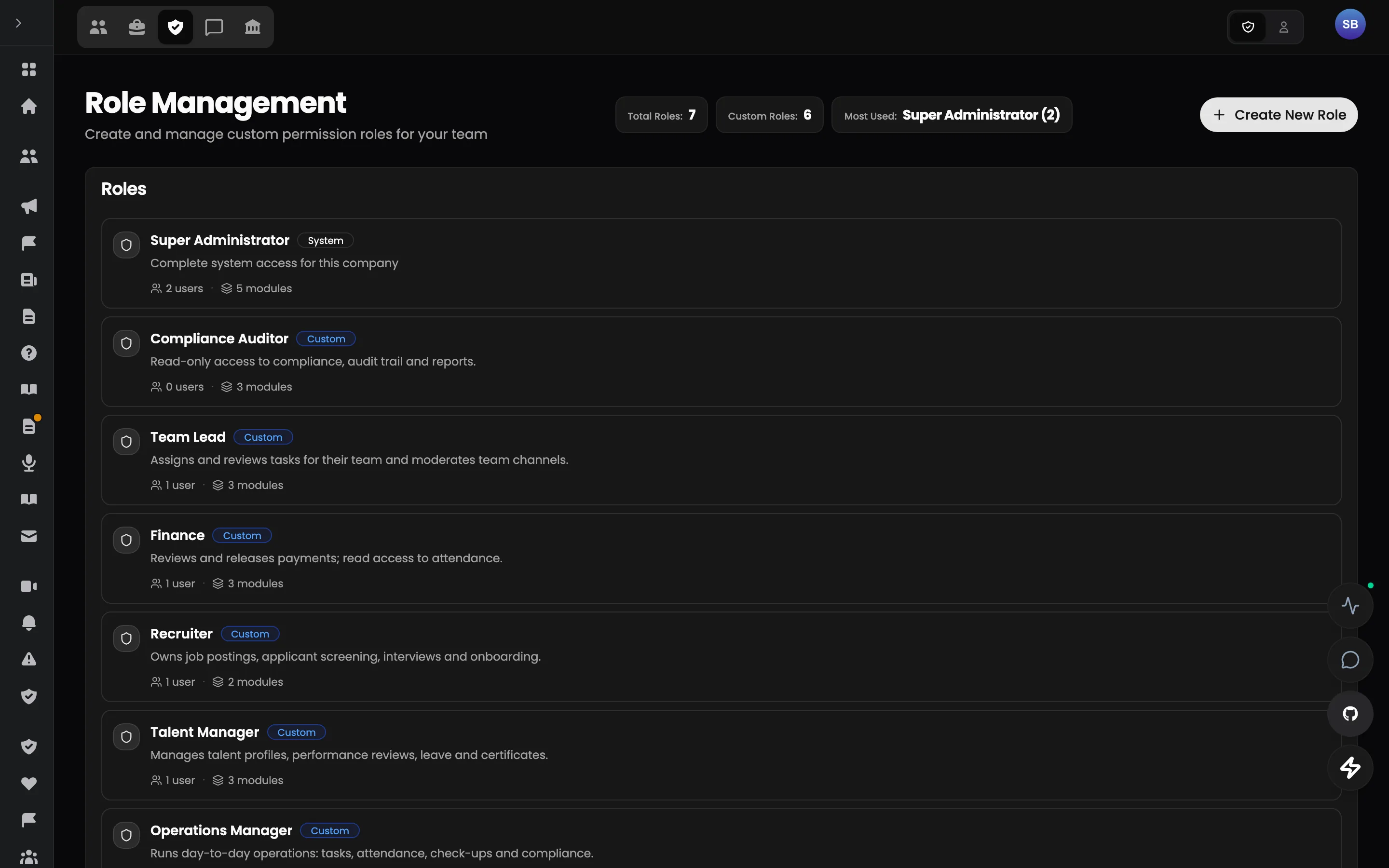
Operations
Roles & access
Every action logged. Every role scoped.
ExploreThe pilot
What a pilot looks like
Scope
One distributed team and its rooms, with the tasks that team works on.
Steps
- 1Map where the team talks, where its work lives and where context gets lost
- 2Configure rooms, membership, the welcome sequence and access windows
- 3Move the team's conversations and tasks into Talent Portal; other teams stay put
- 4Review how often context is re-explained and how quickly new members are working
What success looks like
- Messages about work show the work
- New members provisioned without a checklist
- Presence and access match the schedule
- Fewer questions asked twice
The pilot
Don't replace your stack on day one.
Start with the one workflow where fragmentation costs the most. Run Talent Portal alongside your current tools, measure the result, and expand only if it works.